
Table of Contents
Can You Really Do Affiliate Marketing Without a Website?
One of the biggest myths in affiliate marketing is that you need a website before you can start.
That’s simply not true.
A website is helpful, and in the long run it’s one of the best assets you can build, but it isn’t a requirement on day one.
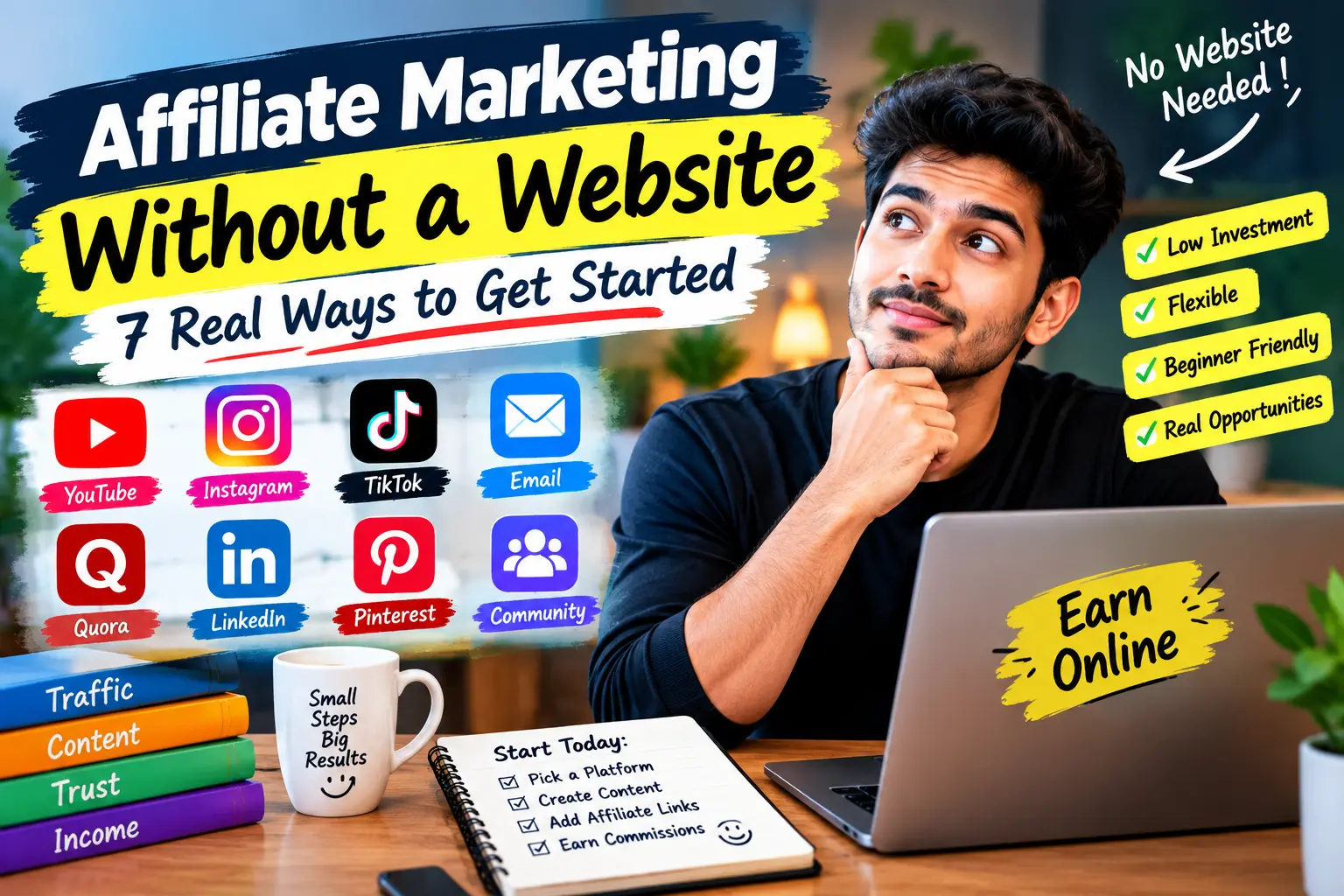
Many affiliates get their first clicks, leads, and commissions through platforms they already use every day, such as YouTube, Instagram, TikTok, email newsletters, and online communities. Several industry guides also note that affiliate marketing can be done through social platforms, email, podcasts, and other channels without owning a website.
The important thing to understand is this:
- You don’t need a website.
- You do need an audience.
Even a small audience can be enough if people trust your recommendations.
Why Most Beginners Think They Need a Website
When you search for affiliate marketing advice, most guides talk about:
- Starting a blog
- Writing reviews
- Creating comparison articles
- Ranking on Google
That’s because websites are excellent long-term assets.
You own the content.
You control the traffic.
You can build an email list.
And nobody can change the rules overnight.
The downside?
Building traffic through SEO takes time.
Many beginners don’t want to wait months before getting started.
That’s why website-free methods have become popular. Social media, YouTube, email, and communities allow people to begin promoting products while they’re still learning the business.
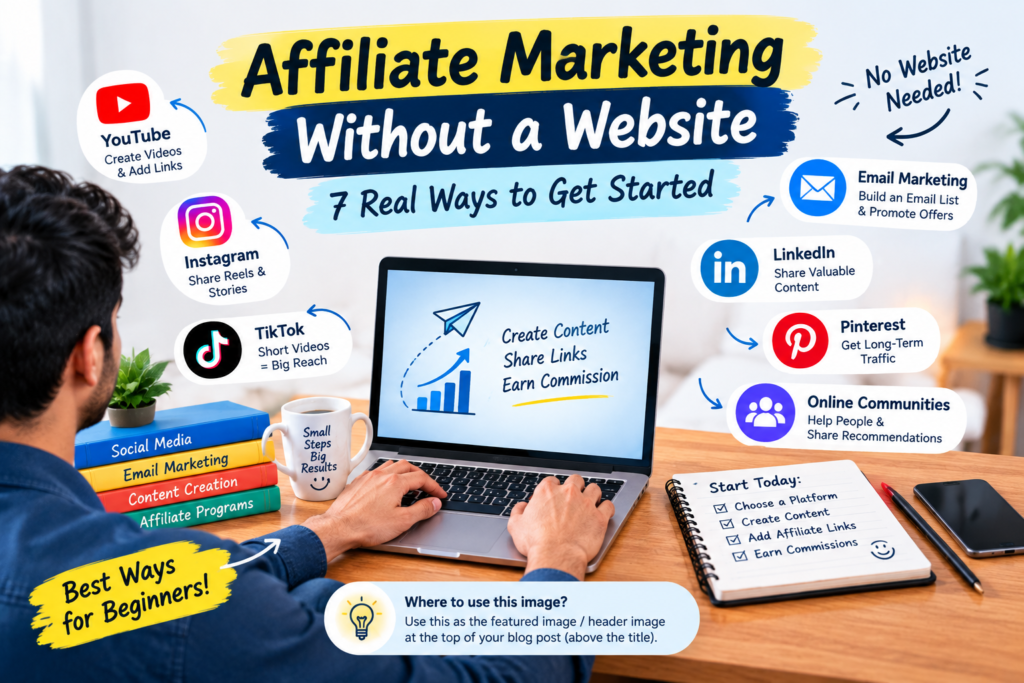
7 Real Ways to Start Affiliate Marketing Without a Website
1. Start a YouTube Channel
If I were starting from zero today, YouTube would be one of the first platforms I’d consider.
Why?
Because people often search YouTube before buying something.
Think about your own behavior.
Before purchasing software, a course, a hosting plan, or a tool, you’ve probably watched reviews first.
That’s exactly where affiliate marketing fits naturally.
You can create:
- Tutorials
- Product reviews
- Comparisons
- Beginner guides
- Case-study style videos
Then place affiliate links in your video description.
A single helpful video can continue bringing clicks long after it’s published.
2. Use Instagram or TikTok
Not everyone enjoys writing articles.
Some people are better on camera.
Instagram Reels and TikTok videos can work surprisingly well for affiliate marketing when the content feels genuine rather than promotional.
Instead of constantly posting links, focus on:
- Tips
- Tutorials
- Mini reviews
- Problem-solving content
Build trust first.
Recommendations become much easier when people already value your content.
3. Build an Email List
Many affiliate marketers use email lists together with traffic sources such as solo ads to reach new subscribers and grow faster.
This is probably the most underrated option.
Most beginners focus on social media followers.
Experienced marketers often focus on email subscribers.
Why?
Because you own your email list.
Algorithms change.
Social platforms change.
Your email list stays with you.
Many affiliates use a simple landing page to collect emails and then recommend useful products through newsletters and follow-up emails.
4. Answer Questions on Quora
People visit Quora because they have questions.
Questions create opportunities.
For example:
- What’s the best email marketing software?
- Which hosting company should I choose?
- Is affiliate marketing worth it?
If you can provide genuinely useful answers, people may click through to learn more about the products you mention.
The key word here is useful.
Spam doesn’t work.
Helpful answers do.
5. Create Content on Medium or LinkedIn
Most beginners overlook these platforms.
That’s a mistake.
Medium and LinkedIn allow you to publish long-form content without running your own website.
You can share:
- Guides
- Tutorials
- Industry insights
- Product recommendations
This approach works especially well in business, marketing, freelancing, and software-related niches.
6. Use Pinterest
Pinterest is often treated like social media, but it behaves more like a search engine.
People actively search for ideas, recommendations, and solutions.
That means your content can continue receiving traffic for months after publication.
Certain niches tend to perform particularly well on Pinterest, including lifestyle, DIY, finance, productivity, and online business content.
7. Build a Community
Communities can be powerful when they’re built around a specific topic.
Examples include:
- Facebook Groups
- Telegram Channels
- Discord Communities
The goal isn’t to drop affiliate links everywhere.
The goal is to help people.
When members trust your advice, recommendations feel natural instead of forced.
Trust drives affiliate sales far more effectively than aggressive promotion.
Which Method Is Best for Beginners?
There’s no single answer.
The best platform is usually the one you can stay consistent with.
If you enjoy video:
Start with YouTube.
If you enjoy short-form content:
Try Instagram or TikTok.
If you enjoy writing:
Consider Medium, LinkedIn, or email newsletters.
The biggest mistake is trying to do everything at once.
Pick one platform.
Learn it.
Get results.
Then expand.
Before choosing a platform, make sure you understand how affiliate marketing works and how commissions are tracked.
Mistakes to Avoid
Promoting Products You Don’t Understand
It’s hard to build trust when you’re recommending products you’ve never researched properly.
Learn before you promote.
Chasing Every Affiliate Program
A focused approach is usually more effective than promoting dozens of unrelated products.
Stay within your niche.
Ignoring Audience Building
Affiliate marketing isn’t really about links.
It’s about trust.
No trust usually means no clicks and no commissions.
Expecting Instant Results
Affiliate marketing can work without a website.
That doesn’t mean it’s fast.
Building an audience still takes time and consistency.
Should You Build a Website Later?
In my opinion, yes.
Even if you start without one.
A website gives you:
- More control
- Search engine traffic
- Better branding
- Long-term stability
- Stronger authority
Many successful affiliates start on social platforms and later build a website to create a more durable business. Industry experts frequently point out that social platforms are useful, but they’re still platforms you don’t control.
Think of a website as the next step, not the first step.
Final Thoughts
Affiliate marketing without a website is absolutely possible.
In fact, many beginners get started that way.
The important thing is not whether you have a website.
It’s whether you can consistently help people, earn trust, and recommend products that genuinely solve problems.
Start with one platform.
Focus on creating useful content.
Learn what your audience needs.
Then, as your skills grow, consider building a website that you fully control.
That’s often where affiliate marketing becomes a long-term business rather than just a side project.
Want Help Learning Affiliate Marketing?
If you’re serious about learning affiliate marketing and want a simpler path instead of figuring everything out on your own, you can learn directly from me.
On GrowWithShivamm, I share beginner-friendly training, practical strategies, and step-by-step guidance designed to help you understand affiliate marketing, traffic generation, and online business in a way that’s easy to follow.
And if you ever need more personal guidance, one-to-one mentorship is also available.
The goal isn’t just to learn affiliate marketing.
The goal is to build real skills that can help you create something valuable online over the long term.
1 thought on “Affiliate Marketing Without a Website: 7 Real Ways to Get Started”