
Table of Contents
Can You Promote Affiliate Links Without a Website?
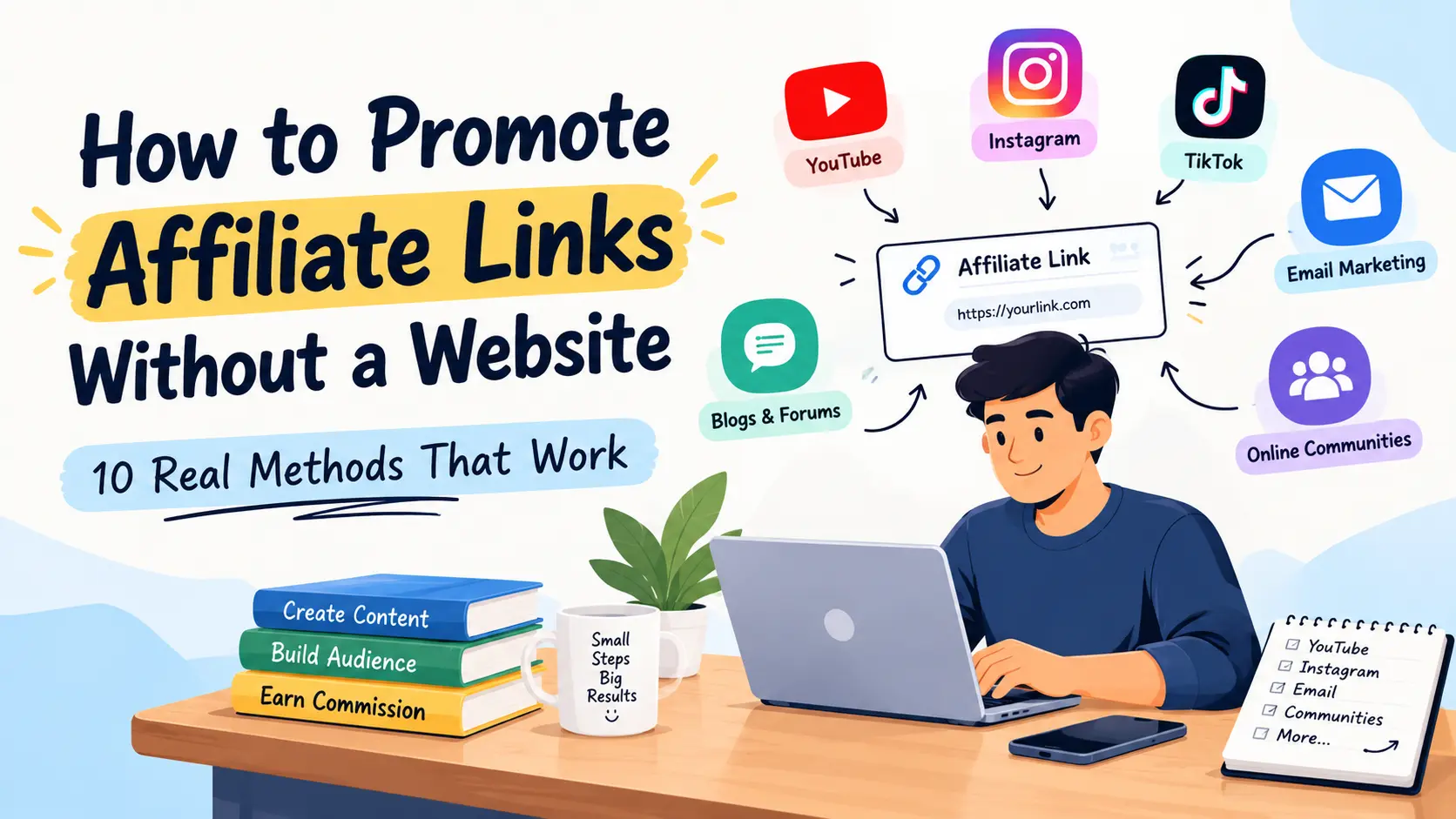
How to promote affiliate links without a website is one of the most common questions beginners ask when they start affiliate marketing.
The good news is that you don’t need a blog on day one.
Many successful affiliates get their first clicks and even their first commissions before they ever launch a website.
What you actually need is a way to reach people who are interested in the products you’re recommending.
That audience can come from YouTube, social media, email marketing, online communities, or several other traffic sources.
A website helps in the long run, but it’s not a requirement to get started.
Why Most Beginners Get This Wrong
A lot of affiliate marketing guides focus heavily on blogging and SEO.
That’s because websites are powerful long-term assets.
However, many beginners assume that means they can’t start until their website is ready.
As a result, they spend weeks setting things up instead of learning how to attract an audience.
The reality is simple:
People buy because they trust recommendations.
They don’t buy because you own a website.
Learning how to promote affiliate links without a website is more about building trust than dropping links everywhere.
1. Start a YouTube Channel
YouTube remains one of the best platforms if you’re trying to figure out how to promote affiliate links without a website.
Think about what people do before buying software, tools, hosting, or online courses.
They watch videos.
You can create:
- Tutorials
- Reviews
- Comparisons
- Walkthroughs
- Beginner guides
Your affiliate links can be added naturally in the video description.
2. Use Instagram Reels
Short-form video content can generate attention quickly.
Instead of constantly posting affiliate links, focus on solving small problems.
For example:
- Quick marketing tips
- AI tool demonstrations
- Productivity hacks
- Blogging advice
People are far more likely to click your recommendations after they’ve seen useful content.
3. Use TikTok
TikTok works similarly to Instagram Reels.
The advantage is that even small accounts can reach large audiences if the content resonates.
Educational content often performs surprisingly well.
4. Build an Email List
Many beginners ignore email marketing.
Email marketing is another effective answer to the question of how to promote affiliate links without a website.
That’s a mistake.
Social media followers belong to the platform.
Email subscribers belong to you.
A simple landing page can help you collect email addresses and build a list that you control.
Over time, this becomes one of your most valuable assets.
5. Answer Questions on Quora
People visit Quora because they’re actively looking for answers.
That creates opportunities.
You can answer questions related to:
- Affiliate marketing
- Blogging
- SEO
- AI tools
- Online business
Focus on being genuinely helpful.
Avoid dropping links everywhere.
Trust comes first.
6. Publish on Medium
Medium allows you to publish long-form content without managing your own website.
You can write:
- Tutorials
- Product reviews
- Guides
- Opinion pieces
It’s a good platform for practicing content creation while building an audience.
7. Use LinkedIn
LinkedIn is especially useful if your niche includes:
- Business
- Marketing
- SaaS
- Freelancing
- Productivity
Helpful posts can generate targeted traffic and professional connections.
8. Use Solo Ads
Solo ads involve paying someone with an email list to send visitors to your offer.
This can work well for:
- Lead generation
- Email list building
- Affiliate funnels
However, traffic quality varies significantly.
9. Create a Facebook Group
Instead of promoting products immediately, build a community around a specific topic.
Examples:
- Affiliate Marketing
- Blogging
- AI Tools
- Freelancing
Communities create trust, and trust creates sales.
10. Start a Telegram Channel
Telegram has become increasingly popular among marketers.
You can share:
- Tips
- Resources
- Updates
- Product recommendations
Just make sure the content provides value rather than becoming a stream of affiliate links.
Which Method Should Beginners Choose?
If you’re starting from scratch, I would focus on one platform rather than trying everything at once.
A simple approach could be:
- YouTube if you’re comfortable on camera
- Instagram if you enjoy short-form content
- Email marketing if you’re serious about long-term growth
- Quora if you enjoy writing
Master one platform first.
Then expand.
Mistakes to Avoid
Promoting Everything
Not every affiliate program is worth promoting.
Stay focused on products that genuinely help your audience.
Ignoring Trust
Affiliate marketing is built on trust.
Without trust, clicks rarely turn into commissions.
Chasing Fast Results
Many beginners quit after a few weeks.
Most successful affiliates stay consistent for months before seeing meaningful results.
Posting Links Without Value
People rarely click random affiliate links.
Helpful content should always come first.
Final Thoughts
Once you understand how to promote affiliate links without a website, you can start generating traffic and building an audience even before launching your own blog.
Learning how to promote affiliate links without a website can help you get started much faster than waiting for the perfect blog or SEO strategy.
The key is to focus on building trust, helping people, and consistently creating useful content.
Start with one traffic source.
Learn what works.
Improve your skills over time.
That’s usually a much better approach than trying ten different strategies at once.
Want Help Getting Started?
If you’re serious about learning affiliate marketing and want a step-by-step roadmap instead of guessing what to do next, you can explore the training resources available on GrowWithShivamm.com.
And if you’d like personal guidance, feedback, and help building your affiliate marketing strategy, you can also apply for 1-to-1 mentorship through Learn.ShivamSharmaa.com.
Sometimes a few small corrections can save months of trial and error.
3 thoughts on “How to Promote Affiliate Links Without a Website: 10 Real Methods That Work”