
Table of Contents
How to Buy Solo Ads for Affiliate Marketing: 7 Tips for Beginners
When I first started learning about affiliate marketing, one thing that confused me was traffic. You can have an affiliate link and a good product, but how will people find it?
This is where solo ads come into the picture.
Some marketers use solo ads to bring people to their landing pages or email lists. You may have seen people talking about buying clicks from email list owners, but if you’re new to this, you probably have a few questions.
Learning how to buy solo ads can help affiliate marketers reach a targeted audience without building a large email list of their own. However, choosing the right provider and checking traffic quality are important before spending money.
Where do you buy solo ads? How do you choose a seller? And how do you know if the traffic is worth paying for?
Let’s understand it in simple words.
What Are Solo Ads?
Solo ads are a type of email advertising.
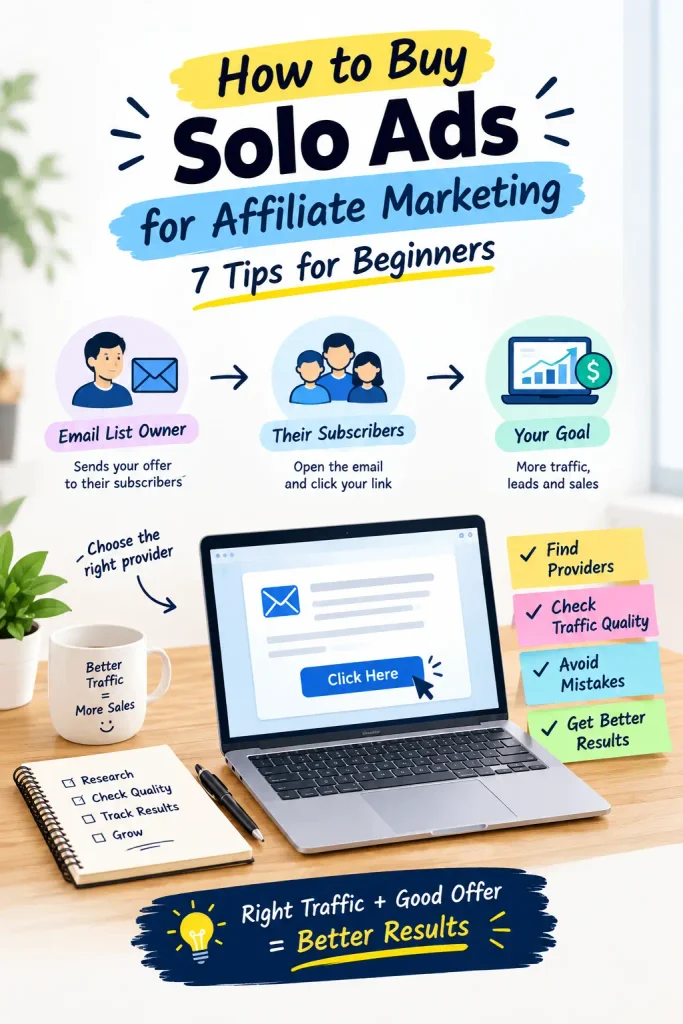
In simple terms, you pay someone who has an email list to send an email promoting your landing page or offer to their subscribers.
For example, suppose you’re promoting an affiliate marketing course. You find a seller whose email list is focused on online business. You pay that seller to send an email to their subscribers with a link to your landing page.
Some people may click your link. A few may join your email list, and some might eventually buy the product.
But not everyone who clicks will become a customer. That’s something you should understand before spending money.
If you’re new to this business, you can first read my guide on what affiliate marketing is and how it works.
If you are learning how to buy solo ads, remember that you are paying for access to another person’s email audience. The quality and relevance of that audience matter more than the number of clicks alone.
Are Solo Ads Good for Affiliate Marketing?
Solo ads can be useful, but they don’t work the same way for everyone.
The main benefit is that you don’t have to build a large audience before sending traffic to your offer. You can pay a list owner to reach people who may already be interested in your niche.
The problem is that you have to pay for the traffic, whether those visitors buy something or not.
Imagine spending money on 100 clicks and getting no sales. That doesn’t always mean the seller is bad. Your landing page, offer, or audience could also be the problem.
That’s why I wouldn’t suggest spending a lot of money on solo ads when you’re just starting out.
First, understand affiliate marketing and learn how to promote products. If you want to explore other methods, here’s my guide to affiliate marketing without a website.
Understanding how to buy solo ads is important before investing in paid traffic. Solo ads may help you reach people who are already interested in your niche, but results depend on the audience, your offer, and the quality of your landing page.
Before you buy solo ads, take some time to understand your audience and offer. Learning how to buy solo ads is not just about finding a seller. It also means checking whether the seller’s subscribers are interested in your niche and whether your landing page matches their needs.
How to Buy Solo Ads: 7 Tips for Beginners
1. Decide What You Want From Your Traffic
Before buying solo ads, decide what you want visitors to do.
Do you want people to join your email list? Do you want to send them to a landing page? Or are you trying to promote a particular affiliate product?
Choose one goal first.
For example, if you want to build an email list, prepare a simple landing page where visitors can sign up. Give them a clear reason to join instead of asking for their email without offering anything useful.
When you know your goal, it’s much easier to check whether your campaign is working.
2. Find a Seller Who Understands Your Niche
This is one of the most important things to check.
Let’s say you’re promoting a product related to affiliate marketing. You should look for sellers whose audience is interested in online business, digital marketing, or similar topics.
A large email list doesn’t automatically mean that it’s the right audience for your offer.
Before buying, ask the seller about their audience, where their subscribers come from, and what kind of traffic they provide.
If the seller cannot explain these things clearly, take your time before making a decision.
3. Compare Different Solo Ads Providers
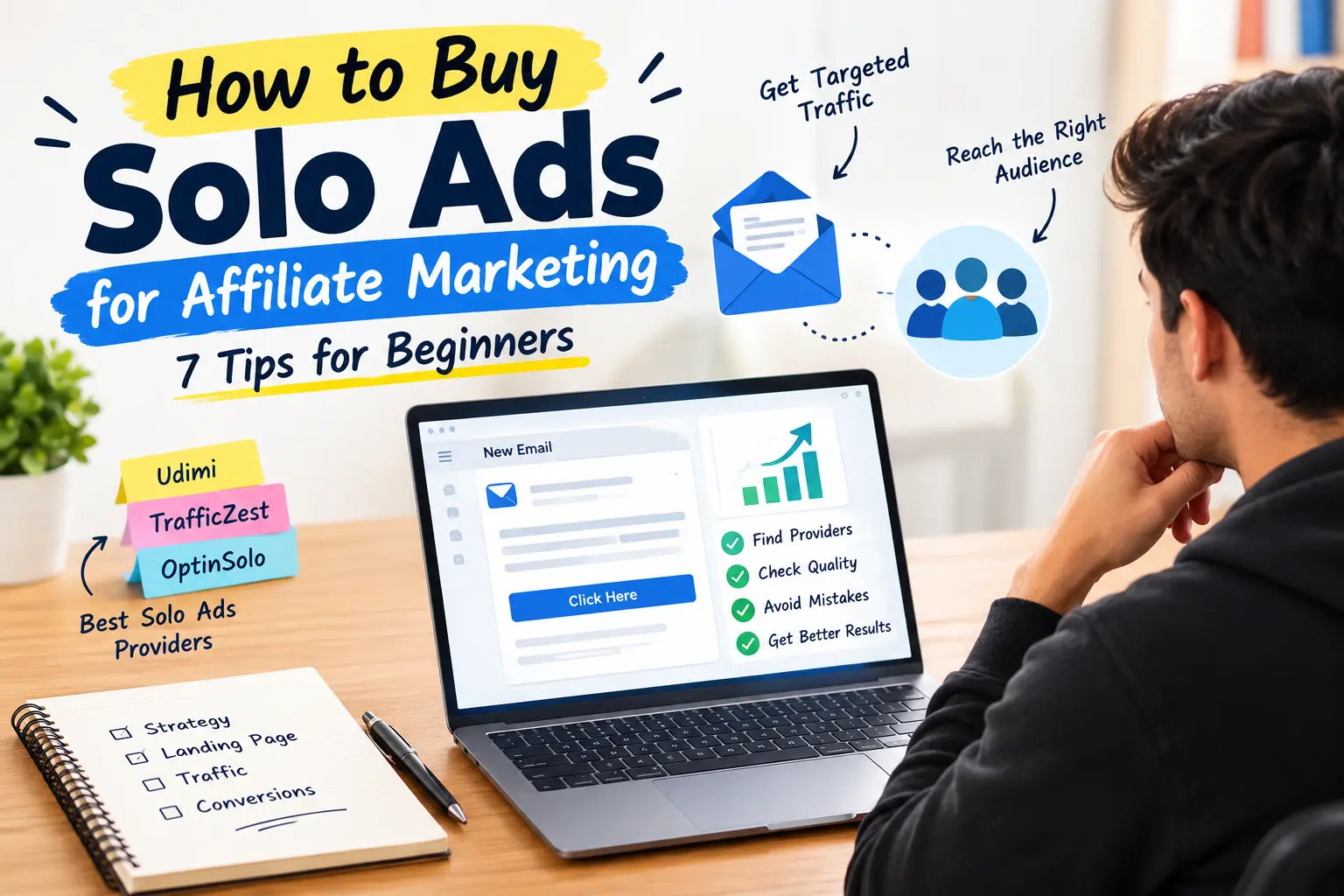
There are several platforms you can research when looking for solo ad traffic.
Udimi
Udimi is a marketplace where you can explore solo ad sellers and compare the information available about their services.
Website: Click Here
TrafficZest
TrafficZest is another service you can research when comparing traffic options for your campaign.
Website: Click Here
OptinSolo
You can also investigate OptinSolo and check whether its current services suit your needs.
Website: Click Here
Before using any of these services, check their current terms, seller information, and refund or dispute policies. Don’t assume that every seller on a platform will provide the same quality of traffic.
I would also avoid choosing a provider just because someone recommends it in a video or promises amazing results.
Do your own research before paying.
When deciding how to buy solo ads, look for providers who can explain their traffic sources and have experience with your niche. Avoid making a decision based only on cheap prices or big traffic promises.
4. Don’t Buy Solo Ads Just Because They’re Cheap
When you’re new, it’s tempting to choose the cheapest package available.
But think about it for a moment.
What is the point of getting hundreds of clicks if those people have no interest in your offer?
Before looking at the price, check whether the audience matches your niche. Read the available reviews and ask questions about the traffic.
Also, be careful with sellers who promise guaranteed sales or profits. Nobody can guarantee that people will buy your affiliate product just because they click a link.
5. Start With a Small Budget
You don’t need to spend a large amount on your first campaign.
Start with an amount you can afford to lose. Paid traffic always comes with some risk, especially when you haven’t tested your landing page or offer before.
For example, you could run a small campaign and check how many people visit your page and how many subscribe to your email list.
If the results are poor, don’t immediately buy more clicks.
First, try to understand what went wrong.
Maybe the page needs improvement. Maybe the offer isn’t suitable for that audience. Or maybe the traffic isn’t what you expected.
A small test can help you learn without putting too much money at risk.
A beginner’s approach to how to buy solo ads should be simple: start with a small test, measure the results, and increase your budget only when the campaign shows potential.
6. Track Your Clicks and Results
Buying traffic is only one part of the process. You also need to check what happens after people click.
Keep an eye on:
- The number of clicks you receive
- How many people join your email list
- How many visitors click through to the offer
- How many sales or leads you get
- How much you spend compared with your earnings
For example, suppose you spend $40 and get 100 clicks. Eight people join your email list.
Your cost per subscriber is $5.
Now you have a number you can use to evaluate your campaign. But you still need to see whether those subscribers are interested in your emails and whether they eventually generate sales.
Don’t judge a campaign only by the number of clicks.
7. Learn From Your First Campaign
After your campaign ends, take a little time to review the results.
If people visit your landing page but don’t sign up, check whether the page explains the offer properly. If people join your list but never engage with your emails, look at the content you’re sending them.
And if the traffic looks suspicious or doesn’t match what you paid for, keep your records and contact the provider through its official support channel.
The idea isn’t to keep spending until you get a sale. It’s to understand what works for your offer and make better decisions next time.
How Much Should You Spend on Solo Ads?
There is no fixed amount that every beginner should spend on solo ads.
The cost depends on the provider, the audience, and the package you choose.
Instead of thinking about how much money you could make, decide how much you’re comfortable spending on a test.
Make sure your landing page is ready, your tracking works, and you know what results you want to measure.
Also remember that your total cost may include email marketing software, landing page tools, and other services.
Even if you get subscribers, your campaign may not be profitable if the overall costs are too high.
Common Mistakes to Avoid
Here are a few mistakes worth avoiding when buying solo ads.
Buying traffic before preparing your landing page. Check that your page works properly on mobile and desktop.
Expecting instant commissions. Getting clicks doesn’t mean that people will buy immediately.
Choosing a seller without research. Take time to understand the audience and the seller’s terms.
Spending more after a bad result. First find out why your campaign didn’t work as expected.
Ignoring your email subscribers. If people join your list, send them useful information instead of promoting products in every email.
Small mistakes can cost money, so take the time to understand the process before increasing your budget.
Solo Ads vs Free Traffic: Which Is Better?
It depends on your budget and how you prefer to work.
With solo ads, you pay to reach an existing email audience. You may get visitors sooner, but you also risk losing the money you spend.
With free traffic methods, such as YouTube, blogging, and social media, you invest your time in creating content and building an audience.
Neither method guarantees sales.
If you don’t have a budget for paid traffic, you can start by learning how to promote affiliate links without a website.
You can build your skills first and explore paid traffic later when you understand your audience and offer better.
The best way to learn how to buy solo ads is to test carefully and use real campaign data to make decisions. Every provider may deliver different results, so track your clicks, leads, and sales before investing more.
Frequently Asked Questions
Can beginners buy solo ads?
Yes, but beginners should research the seller, prepare their landing page, and start with a small budget. You should understand the risks before paying for traffic.
Can solo ads generate affiliate sales?
They can generate sales, but results depend on the audience, offer, landing page, and follow-up. There is no guarantee of profit.
Which solo ad provider should I choose?
Compare available providers and sellers based on audience relevance, service terms, reviews, and the information they provide about their traffic. Don’t choose based on price alone.
Should I buy solo ads or build an audience first?
If you have little experience and no budget for testing, learning free traffic methods first may be a better starting point. If you have a clear offer and can afford a small test, solo ads may be worth researching.
How do I buy solo ads for affiliate marketing?
Start by choosing a relevant solo ads provider, checking reviews and traffic quality, and setting a small test budget. Track clicks, leads, and sales before deciding whether to spend more.
Final Thoughts
Buying solo ads is not just about paying for clicks. You need to know who you’re reaching, what you’re promoting, and what you want people to do after they visit your page.
If you’re a beginner, don’t rush to spend money because someone else claims to be making sales with paid traffic.
Learn the basics, prepare your offer, research the seller, and start small. Give yourself time to understand the results before making another investment.
Affiliate marketing takes learning and patience. You don’t need to try every strategy at once. Start with one method, understand it properly, and build from there.
Want to Learn Affiliate Marketing With Me?
If you want help understanding affiliate marketing and learning how to get started, you can explore my affiliate marketing learning resources.
I also offer mentorship and online learning opportunities for people who want to improve their skills and understand the process step by step.
You can start by learning the basics, practising what you learn, and choosing a strategy that fits your goals and budget.
Keep learning, take action, and improve one step at a time.
Related Articles You May Like
Want to learn more about affiliate marketing? Check out these helpful guides next:
- What Is Affiliate Marketing? A Beginner’s Guide
- Affiliate Marketing Without a Website: How to Get Started
- How to Promote Affiliate Links Without a Website
- Affiliate Marketing Learning Resources
Read these guides to understand different ways to promote affiliate products, reach the right audience, and build your affiliate marketing skills step by step.