
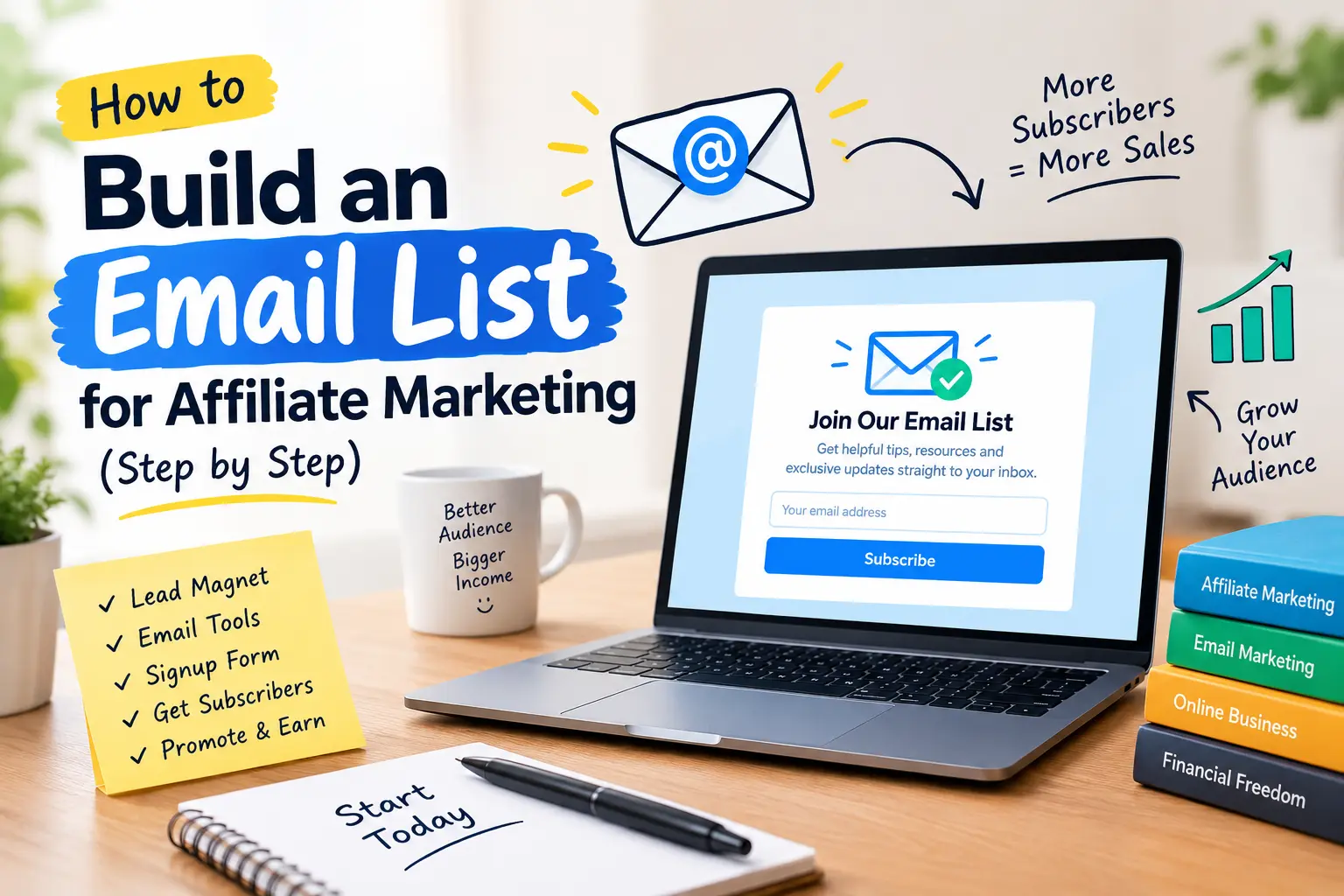
If you are doing affiliate marketing only through social media, you might have noticed one problem: you don’t really control your audience.
Your posts may get views today and almost no reach tomorrow. Your account could grow slowly, or your followers might not even see the products you recommend.
This is one reason many affiliate marketers start building an email list.
An email list gives you a direct way to communicate with people who have chosen to hear from you. You can share helpful information, answer common questions, recommend relevant products, and build relationships over time.
But here’s the important part: building an email list is not just about collecting email addresses. It’s about attracting the right people and giving them a reason to stay subscribed.
In this guide, you’ll learn how to build an email list for affiliate marketing step by step, even if you’re a beginner with a small audience and no existing website traffic.
Table of Contents
What Is an Email List in Affiliate Marketing?
An email list is a collection of people who have given you permission to send them emails.
For example, imagine you create content about affiliate marketing tools. Someone discovers your tutorial, downloads your free checklist, and enters their email address to receive it.
Now, you can send that person useful emails about affiliate marketing, product research, traffic generation, and tools that may help them.
If you recommend an affiliate product that genuinely fits their needs, they can visit your affiliate link and decide whether to buy it.
That’s the basic idea behind email list building for affiliate marketing.
Instead of trying to make a sale every time someone sees your content, you can build a relationship and help subscribers make informed decisions.
Why Do Affiliate Marketers Need an Email List?
You can start affiliate marketing without an email list. Many beginners do.
However, building one can make your marketing more sustainable because you have a way to reconnect with subscribers who have opted in.
Here are a few reasons it can be useful.
1. You Can Build Relationships With Your Audience
People don’t always buy a product the first time they hear about it.
They may want to understand how it works, compare alternatives, or learn whether it solves their problem.
Helpful emails give you an opportunity to answer these questions and build trust over time.
2. You Can Promote Relevant Products More Than Once
A social media post may disappear from someone’s feed quickly. An email gives you another opportunity to share a useful tutorial, comparison, or product recommendation.
That doesn’t mean you should repeatedly send the same affiliate offer. Each email should have a clear purpose and provide something useful.
3. You Are Less Dependent on Social Media Reach
Social media platforms can change their algorithms, and account access can sometimes be restricted.
An email list gives you another communication channel instead of relying entirely on one platform.
Remember, your list still depends on your email service provider, subscriber consent, and email deliverability. Keep your contacts backed up where permitted and follow the platform’s rules.
4. You Can Understand What Your Audience Needs
Email replies, clicks, and questions can help you understand which topics interest your subscribers.
For example, if your audience regularly asks about finding affiliate products, you could create more tutorials on product research rather than sending unrelated offers.
Step 1: Choose a Specific Audience
Before you create a signup form, decide who you want to attract.
This is an important step because people are more likely to subscribe when your content solves a problem they actually have.
For example, instead of targeting everyone interested in making money online, choose a more specific audience.
Here are some examples:
- Beginners who want to learn affiliate marketing.
- Bloggers looking for SEO tools.
- Email marketers who want to improve their campaigns.
- Content creators looking for useful AI tools.
- Affiliate marketers researching products and vendors.
Let’s say your audience is beginner affiliate marketers.
You could create content about choosing affiliate programs, finding products, creating content, and getting traffic.
Your email list would then attract people who are interested in those subjects, making it easier to recommend relevant resources later.
My suggestion: Start with one audience and one main problem. You can expand into other topics after you understand what your subscribers want.
Step 2: Create a Useful Lead Magnet
A lead magnet is a free resource that people receive in exchange for subscribing to your email list.
It gives visitors a clear reason to enter their email address instead of simply leaving your website.
Your lead magnet doesn’t need to be complicated. It just needs to solve a specific problem.
Here are some ideas for affiliate marketers:
- A beginner’s affiliate marketing checklist.
- A list of useful affiliate marketing tools.
- A product research worksheet.
- An email marketing checklist.
- A simple guide to choosing affiliate products.
- A collection of email templates for beginners.
For example, if you write about affiliate marketing, you could offer a free PDF called “Affiliate Product Research Checklist for Beginners.”
The checklist might help readers evaluate a product’s audience fit, sales page, pricing, vendor reputation, and available affiliate resources.
A useful lead magnet can make it easier to build an email list for affiliate marketing because it offers visitors something valuable in return for subscribing. You could create a beginner’s checklist, a product research worksheet, or a short guide that solves one specific problem.
How to Create a Lead Magnet for Affiliate Marketing
Follow these simple steps:
- Identify one problem your audience struggles with.
- Choose a format, such as a PDF, checklist, template, or short guide.
- Create the resource using a tool you are comfortable with.
- Keep the information practical and easy to use.
- Create a signup form where people can request the resource.
Avoid creating a 50-page ebook just because you think a longer resource will attract more subscribers. A short, genuinely useful checklist can be a better starting point.
Step 3: Choose an Email Marketing Platform
Once your lead magnet is ready, you need a platform to collect email addresses and send emails.
An email marketing platform can help you manage subscribers, create signup forms, send welcome emails, and organize your campaigns.
Some options worth exploring include:
- MailerLite: An option to explore for email campaigns, signup forms, and automation.
- Kit: A platform designed with creators and audience-building workflows in mind.
- Brevo: An option to consider for email marketing and related communication tools.
Compare their current plans, subscriber limits, automation features, and terms before choosing one. Pricing and free-plan limits can change.
What Should Beginners Look For?
You don’t need every advanced feature when you’re starting out.
Focus on these essentials:
- An easy way to collect email addresses.
- A way to send newsletters.
- Welcome email automation, if available on your plan.
- Subscriber management and unsubscribe options.
- Basic reporting for opens, clicks, and campaign performance.
Choose a platform that fits your current needs and budget. You can switch or upgrade later if your requirements change.
Step 4: Create a Landing Page or Signup Form
A landing page is a page designed to encourage visitors to take one main action, such as subscribing to your email list.
You can also place a signup form directly inside a blog post or on a relevant page of your website.
For example, a blog about affiliate product research could include a signup form offering a free product research checklist.
Your form should make three things clear:
- What the visitor will receive.
- How the resource will help them.
- What they are agreeing to receive by subscribing.
Here is a simple example:
Headline: Get the Free Affiliate Product Research Checklist
Description: Learn what to check before promoting an affiliate product, from audience fit to vendor reputation and affiliate resources.
Button: Send Me the Free Checklist
Consent note: By subscribing, you agree to receive the requested resource and the emails described in the signup form. You can unsubscribe at any time.
Use the consent wording appropriate to your actual email practices and the laws that apply to your subscribers.
Keep Your Signup Form Simple
In most cases, an email address is enough to get started. You can ask for a first name if you have a reason to use it, but avoid requesting unnecessary personal information.
Make sure your form works on mobile devices, the promised resource is delivered correctly, and subscribers can unsubscribe from marketing emails.
Step 5: Get Your First Email Subscribers
You don’t need thousands of visitors to start building an email list.
You need a relevant audience and a clear reason for them to subscribe.
Here are a few practical ways to find your first subscribers.
One practical way to build an email list for affiliate marketing is to connect your blog posts, YouTube videos, and social media content to a relevant signup page. Make sure the free resource matches the topic so visitors understand why joining your list is useful.
1. Add Signup Forms to Relevant Blog Posts
If you already publish articles, use them to introduce your lead magnet.
For example, an article about promoting affiliate products could offer a free checklist for choosing products to recommend.
You can also connect related articles on your website, such as:
- Affiliate Marketing Without a Website: How to Get Started
- How to Promote Affiliate Links Without a Website
- What Is Affiliate Marketing? A Beginner’s Guide
Place the signup form where it naturally supports the article. The free resource should be relevant to what the reader is already learning.
2. Use YouTube Videos
If you publish YouTube videos, mention a relevant free resource in your video or description.
For example, a video about affiliate product research could direct viewers to a product research checklist.
Make sure the resource is genuinely useful and the link works. Avoid turning every video into a sales pitch.
3. Share Useful Content on Social Media
You can use platforms such as Instagram, YouTube, and other social networks to attract people who are interested in your topic.
Instead of posting only “Join my email list,” share a useful tip and explain how your free resource helps people take the next step.
4. Participate in Relevant Communities
Answer questions in communities where your target audience spends time.
Share a resource only when it genuinely helps answer the question and the community allows promotional links. Don’t spam groups or send unsolicited direct messages.
5. Create More Helpful Content
Blog posts, tutorials, product comparisons, and how-to videos can attract people who are already looking for solutions.
Over time, you can connect this content to a relevant lead magnet and invite interested visitors to subscribe.
Important: Never buy an email list or add people to your marketing list without the required permission. A large list of uninterested contacts is not the same as an engaged audience.
Step 6: Write a Welcome Email
After someone subscribes, send a welcome email that confirms their subscription and delivers what you promised.
This first message helps set expectations for future communication.
A simple welcome email might look like this:
Example Welcome Email
Subject: Here’s Your Affiliate Product Research Checklist
Hi there,
Thanks for requesting the affiliate product research checklist.
You can access your checklist here: [Insert Your Resource Link]
I created this resource to help beginners evaluate affiliate products before deciding what to promote.
Over the next few emails, I’ll share practical tips about affiliate marketing, product research, traffic generation, and useful tools.
My goal is to help you make more informed decisions instead of promoting random products and hoping for results.
If there’s a particular affiliate marketing topic you’d like me to cover, feel free to reply to this email.
Talk soon!
[Your Name]
What Makes a Good Welcome Email?
A good welcome email should:
- Deliver the promised resource.
- Tell subscribers what kind of emails they can expect.
- Sound like a real person rather than an automated sales pitch.
- Give readers a simple way to reply or ask a question.
If you use automation, test the complete process yourself before sending traffic to your signup page.
Step 7: Build Trust Before Promoting Affiliate Products
One common mistake in affiliate marketing is treating every subscriber like a potential sale.
Someone joins your list to learn something useful, but the next email immediately pushes a product. If every message follows the same pattern, subscribers may lose interest or leave.
Instead, focus on helping people make better decisions.
For example, if your audience consists of beginner affiliate marketers, you could send emails about:
- How to research an affiliate product.
- What to look for in a vendor.
- How to create helpful product reviews.
- Ways to attract relevant visitors.
- Mistakes to avoid when starting out.
Once you understand what your audience needs, you can recommend a relevant product when it genuinely fits the topic.
Be Honest About Affiliate Links
If you may earn a commission when someone buys through your link, disclose that relationship clearly.
For example:
“I may earn a commission if you purchase through links in this email, at no additional cost to you.”
Use clear, noticeable disclosure language and follow the rules that apply to your audience and location.
Also, avoid making unsupported income claims or promising that a tool will automatically generate sales.
Trust takes time to build, but aggressive promotion can damage it quickly.
Step 8: Create a Simple Email Marketing Strategy
You don’t need to email subscribers every day to build a useful email list.
Start with a manageable schedule that allows you to send helpful, relevant information consistently.
Here’s an example of a beginner-friendly sequence.
| Purpose | Example topic | |
| Email 1 | Deliver the resource | Your free checklist |
| Email 2 | Help the subscriber | A common beginner mistake |
| Email 3 | Teach a practical skill | How to research affiliate products |
| Email 4 | Share a useful resource | Tools that solve a specific problem |
| Email 5 | Make a relevant recommendation | An affiliate product, with disclosure |
This is only a starting point. Adjust the sequence based on the resource subscribers requested and the expectations you set on your signup form.
You can also send newsletters when you publish a useful article or create a new tutorial.
Track More Than Subscriber Numbers
A growing email list can be encouraging, but subscriber count alone doesn’t tell you whether your strategy is working.
Pay attention to:
- New subscribers: How many people join over time?
- Clicks: Are people visiting the resources you share?
- Replies: Are subscribers asking questions or starting conversations?
- Unsubscribes: Are certain emails causing people to leave?
- Conversions: Are relevant recommendations leading to actual sales?
Open rates can be useful, but privacy features can make them less reliable. Use clicks, replies, and conversions alongside other metrics.
If subscribers aren’t clicking your links, review the email’s relevance, clarity, audience fit, and call to action before simply sending more emails.
Common Email List Building Mistakes to Avoid
Building an email list is straightforward, but a few mistakes can make it harder to grow a healthy audience.
1. Promoting Too Many Products
Recommending unrelated products can confuse subscribers and reduce trust.
Stay focused on products that fit your audience and the problems they want to solve.
2. Sending Emails Only to Make Sales
If every email contains an affiliate offer, subscribers may stop paying attention.
Balance recommendations with tutorials, practical advice, and helpful resources.
3. Using a Lead Magnet That Doesn’t Match Your Audience
Someone who subscribes for an SEO checklist may not be interested in unrelated make-money-online offers.
Keep your free resource, content, and product recommendations connected.
4. Ignoring Email Deliverability
Emails may land in spam if you use poor sending practices, collect contacts without permission, or fail to configure your sending domain correctly.
Use legitimate signup methods, follow your email provider’s guidance, and configure email authentication such as SPF, DKIM, and DMARC where applicable.
5. Buying Email Lists
Purchased lists often contain people who never agreed to hear from you.
This can lead to complaints, poor engagement, and deliverability problems. Build your list through permission-based methods instead.
6. Giving Up Too Early
Your first subscribers may arrive slowly, especially if your website or social media audience is small.
Use the early stage to improve your lead magnet, create useful content, and understand which topics attract the right people.
How Long Does It Take to Build an Email List?
There is no fixed timeline.
Your results depend on factors such as your audience, content quality, traffic sources, lead magnet, signup page, and how clearly you communicate the value of subscribing.
A website with regular relevant traffic may attract subscribers sooner than a new website with very few visitors. However, even a smaller list can be valuable if its subscribers are genuinely interested in your topic.
Rather than focusing only on reaching 1,000 subscribers, start with smaller goals:
- Publish useful content for a specific audience.
- Create one relevant lead magnet.
- Set up and test your signup process.
- Track how many visitors subscribe.
- Improve the process based on actual results.
You don’t need a massive list before you can begin learning from your audience.
Frequently Asked Questions
Can I do affiliate marketing with an email list?
Yes. You can use email to share useful information and recommend relevant affiliate products. Follow the affiliate program’s terms, disclose your affiliate relationships, and comply with applicable email marketing laws.
Do I need a website to build an email list?
No. You can use a landing page or signup form provided by an email marketing platform, where available. A website can still help you publish useful content and attract subscribers through search traffic.
Is email marketing free for affiliate marketers?
Some email marketing platforms offer free plans or limited free features. Availability, subscriber limits, and automation options vary, so check the current terms before choosing a platform.
How many subscribers do I need to make affiliate sales?
There is no universal number. Results depend on the audience’s needs, product relevance, email engagement, offer quality, and other factors. A smaller, interested list may perform better than a much larger list of people who rarely engage.
How often should I email my subscribers?
Start with a schedule you can maintain and explain your expected email frequency when people subscribe. Send useful, relevant emails rather than increasing frequency just to promote more products.
When you build an email list for affiliate marketing, focus on attracting interested subscribers rather than collecting as many email addresses as possible. Share useful information consistently, respect subscriber preferences, and recommend products only when they fit your audience’s needs.
Final Thoughts
Learning how to build an email list for affiliate marketing is about more than collecting email addresses. It’s about finding people who are interested in your topic, offering them something useful, and staying in touch in a way that respects their time and choices.
Start with one audience, create one helpful lead magnet, choose an email platform, and set up a simple signup process. Then focus on sending emails that answer questions and solve real problems.
You don’t need to make everything perfect before you start. Build the basic system, test it, and improve it as you learn more about your audience.
If you’re also learning affiliate marketing, explore the related guides on this website and apply one step at a time.
Want to learn affiliate marketing with practical guidance?
Visit ShivamSharmaa.com to explore more tutorials, or check out the learning resources at Learn With Shivam.